Monday July: A Modern Script Font for Elegant Designs
When a project calls for a touch of personal flair without sacrificing clarity, the choice of typeface becomes critical. You need something that feels handcrafted yet polished, expressive but still readable. This is the space where Monday July operates—a modern script font designed to bridge the gap between casual authenticity and sophisticated design. It’s not just another decorative typeface; it’s a versatile tool for creatives who want their work to feel both intimate and professional.
Understanding the Visual Personality of Monday July
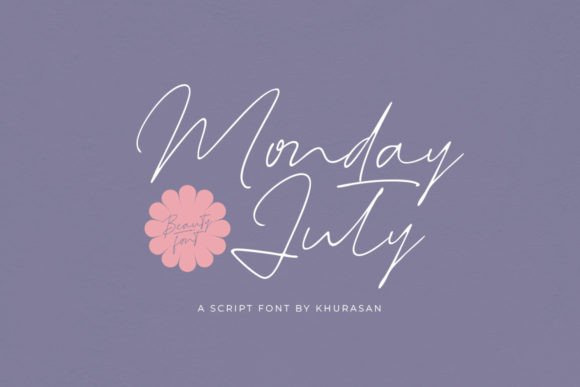
At its core, Monday July presents a flowing, connected script style. The letterforms exhibit a natural, slightly irregular baseline that mimics the organic rhythm of handwriting, but with a level of refinement that prevents it from looking sloppy. The strokes vary in thickness, creating a pleasant visual texture that adds depth and interest. This isn’t a rigid, geometric font; it has warmth and movement. The overall personality is one of approachable elegance—it feels inviting, creative, and thoughtfully designed. It carries a contemporary vibe, avoiding the overly formal or antiquated look of some traditional script fonts, making it a perfect fit for modern branding and design trends.
Where This Script Font Truly Shines: Practical Applications
The true test of any premium font is its versatility. Monday July excels in scenarios where you need to inject personality and visual hierarchy into a composition. Its strength lies in its ability to act as a focal point or a complementary accent.
- Logo Design and Brand Identity: For brands in lifestyle, beauty, food, artisan crafts, or boutique retail, Monday July can form the cornerstone of a memorable logo design. It instantly communicates a personal, handcrafted quality. Pair it with a clean sans serif font for body text to create a balanced and professional brand identity system.
- Editorial and Publishing: In editorial design, this script font is ideal for magazine headlines, pull quotes, or chapter titles. It breaks up the monotony of long-form text set in a serif font or sans serif font, guiding the reader’s eye and adding a layer of visual storytelling. It’s equally effective on book covers, especially for genres like romance, memoir, or contemporary fiction, where a personal touch is key.
- Marketing and Digital Presence: The font translates beautifully to digital formats. Use it for social media graphics to make quotes or announcements stand out in a crowded feed. It works well for website headers or call-to-action buttons where you want to convey friendliness and creativity. For packaging design, it can add a gourmet or artisanal feel to product labels, especially for small-batch goods.
- Personal and Commercial Projects: Beyond professional use, it’s a fantastic asset for crafters and hobbyists. Think wedding invitations, greeting cards, personalized stationery, or DIY projects. Because it is PUA encoded, accessing all the decorative glyphs and swashes is straightforward, allowing for easy customization in any design software.
Making It Work: Practical Guidance for Designers and Creators
Choosing a font is just the first step. Using it effectively requires a bit of strategy. Here’s how to integrate Monday July into your workflow for the best results.
Evaluating Project Fit and Readability
Before you commit, ask yourself: does the personality of Monday July match the message of the project? Its casual elegance might not suit a corporate legal firm, but it’s perfect for a yoga studio or a bakery. Always test it in context. Create a mockup of your headline or logo. Zoom out to see if the word remains legible at smaller sizes. For body text or very small applications, it’s generally better to reserve this display font for headlines and use a more straightforward typeface for paragraphs. Modern typography is about contrast and hierarchy; let Monday July do the heavy lifting in the headline while a neutral companion handles the details.
Mastering Font Pairing and Consistency
The key to a cohesive design is a strong font pairing. Since Monday July is a script font with high personality, it pairs best with fonts that have low contrast and simple structures. A geometric sans serif font (like Montserrat or Lato) or a transitional serif font (like Georgia or Times New Roman) often creates a beautiful, balanced partnership. The goal is to let the script font be the star, with the supporting typeface providing clear, readable support. Use the script font consistently for all primary headlines or logos across your materials—from your website to your business cards—to build brand recognition.
Leveraging Included Styles and Licensing
A quality creative font like this often comes with more than just the basic alphabet. Check for stylistic alternates, ligatures, and swashes. These extra glyphs are what allow you to customize the look of words, creating unique flourishes that make your design feel truly bespoke. Remember, because it is a commercial font, ensure you have the correct license for your intended use—whether for a personal blog or for client work and merchandise. Proper licensing protects your project and supports the type designers who create these valuable design assets.
In the end, Monday July is more than just a set of letters. It’s a tool for adding a human touch to digital and print projects. By understanding its strengths and applying it thoughtfully, you can create designs that are not only visually appealing but also emotionally resonant, connecting with your audience in a way that feels both personal and professional.