Ink Bold: The Art of Impactful Lettering
There is a specific nostalgia associated with the weight of a fountain pen on textured paper. It evokes a sense of intention and permanence that digital text often struggles to replicate. Ink Bold is a typeface designed to bridge that gap. It is not merely a handwritten font; it is a premium font that captures the fluidity of ink while possessing the structural integrity required for modern design. For designers and business owners, this represents a rare balance—a typeface that feels personal yet commands authority.
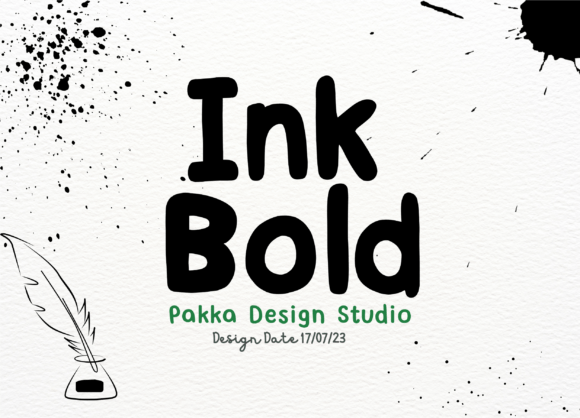
Visually, Ink Bold is defined by its thick, expressive strokes. Unlike standard script fonts that can appear thin or delicate, this typeface embraces high contrast and heavy weight. The letterforms mimic the natural pressure variations of a calligrapher’s hand, resulting in a design that feels organic rather than engineered. It sits comfortably between a script font and a display font, offering the elegance of the former with the visibility of the latter. This makes it an exceptional creative font for projects that need to stand out in a crowded visual landscape.
The Psychology of Bold Handwriting in Branding
When you select a typeface for your brand identity, you are making a psychological promise to your audience. A sans serif font often implies efficiency and modernity, while a standard serif suggests tradition. Ink Bold, however, communicates something more nuanced: it suggests a brand that is confident enough to be personal. It tells the viewer that there is a human element behind the business, but that this human means business.
For entrepreneurs and small business owners, this distinction is vital. Using Ink Bold in your logo design or headline typography can instantly elevate your brand perception. It avoids the "corporate stiffness" of geometric fonts while steering clear of the amateurish look that some free handwritten fonts carry. It is a commercial font that signals professionalism through its quality and execution. When a customer sees this typeface, they perceive a level of care and investment, which subconsciously builds trust.
Strategic Applications for Ink Bold
Understanding where to deploy a font is just as important as choosing it. Because Ink Bold has such a strong personality, it is best used where it can breathe. It functions exceptionally well as a display typeface for headlines, pull quotes, and short, impactful statements. In editorial design, it can break up the monotony of body text, guiding the reader’s eye to key insights. In packaging design, it adds a tactile, artisanal quality that suggests craftsmanship.
However, context matters. Imagine a high-end bakery using Ink Bold for their logo; the thick strokes resemble icing on a cake, immediately communicating indulgence. Conversely, imagine a boutique consultancy firm using it for their email headers; it adds a personal touch to professional correspondence. It works beautifully for:
- Social Media Graphics: Creating thumb-stopping quotes and announcements that feel handcrafted.
- Web Design: Using it for hero section headlines to create an emotional connection immediately upon page load.
- Wedding Stationery: It offers the look of custom calligraphy without the illegibility often associated with light, flowing scripts.
- Book Covers: Particularly in the romance, lifestyle, or self-help genres where the author's voice needs to feel intimate yet authoritative.
Mastering the Art of Font Pairing
One of the most common pitfalls in modern typography is the failure to pair fonts effectively. Because Ink Bold is a display font with high visual weight, it demands a partner that can play a supporting role without competing for attention. A common mistake is pairing it with another expressive font, which leads to visual chaos. The goal is contrast.
The most effective strategy is to pair Ink Bold with a clean, neutral sans serif font. The geometric simplicity of a sans serif provides a clean canvas that allows the organic details of Ink Bold to shine. For example, pairing Ink Bold with a font like Montserrat or Helvetica creates a dynamic hierarchy. The bold, handwritten style handles the emotion and the hook, while the sans serif handles the informational details and smaller text sizes.
Alternatively, you can pair it with a simple, traditional serif font. This works well for editorial projects like magazines or blogs where you want to maintain a classic, literary feel but need a modern twist for headlines. The key is to ensure the x-height and visual weight are balanced so the page doesn't feel top-heavy.
Technical Considerations and Readability
As a designer or content creator, you must respect the technical limitations of any typeface. While Ink Bold is crafted for clarity, it is still a complex letterform. Using it for long paragraphs of body copy would be a mistake; the eye struggles to track lines of text when every letter has high-contrast flourishes. It is a creative font meant for impact, not for dense reading.
When using Ink Bold for web design, pay attention to color contrast. Because the strokes are thick, you can often get away with lighter colors on dark backgrounds (reversed out text) more easily than with thinner fonts, but you should always test for legibility across devices. Ensure that the font files are optimized for web use to maintain fast loading speeds, as heavy graphic elements can slow down a site if not managed correctly.
Evaluating Quality and Licensing
When investing in design assets, quality is non-negotiable. A high-quality font like Ink Bold will include a comprehensive character set. Look for features like stylistic alternates, ligatures, and swashes. These OpenType features allow you to customize the look of the text, ensuring that two instances of the same letter don't look identical, which breaks the illusion of natural handwriting.
Furthermore, understanding licensing is crucial for commercial success. If you are a publisher or a business owner, you need to ensure your license covers your specific usage. Most premium fonts require a desktop license for print materials and a separate web license for your site. If you are creating products for sale—like mugs, t-shirts, or planners—you may need an extended license. Always review the End User License Agreement (EULA) before finalizing a project to avoid legal complications down the road.
Final Verdict: Is Ink Bold Right for You?
Choosing a font is about aligning your visual voice with your message. If your goal is to appear sterile and ultra-minimalist, Ink Bold is likely not the right choice. However, if you want to inject warmth, confidence, and a human touch into your work, it is an invaluable tool. It bridges the gap between the intimacy of a personal note and the professionalism of a corporate brand.
For the blogger looking to stand out, the marketer aiming to increase engagement, or the crafter designing a signature look, Ink Bold offers a robust solution. It proves that bold doesn't have to mean blocky, and handwritten doesn't have to mean messy. It is a testament to the enduring power of the written word, reimagined for the digital age. By integrating this font into your toolkit, you are not just choosing letters; you are choosing to communicate with clarity, style, and impact.